Lance’s Bulletin
Otto Mikkelsen: An Ambitious Alameda Developer
Walk along Alameda Ridge today, and it’s hard not to feel that the neighborhood arrived with intention. Streets unfold gradually. Homes sit confidently above the city. There’s a sense that this place was thought through before it was filled in.
That impression is accurate.
Alameda was shaped by a small group of early developers who believed the ridge could become something more than speculative land. Among them, Otto Mickelsen played a uniquely influential role.
Building a Neighborhood Before the City Arrived
The Alameda Park plat was filed in February of 1909, covering land from NE 24th to NE 29th, Prescott to Fremont, stretching along the ridge and bordering Olmsted Park to the east. Much of the subdivision was developed simultaneously, guided by planning principles that were uncommon for Portland at the time.
Landscape architects from the Olmsted Brothers firm — nationally prominent designers based in Seattle — shaped the layout of Alameda and Irvington alike. Early development occurred first in the lower sections near Fremont, while the ridge itself required greater conviction.
Otto Mikkelsen had that conviction.
While many developers worked from afar, Mikkelsen lived in Alameda. That proximity mattered. It meant decisions were not abstract — they were personal.
A Vision Backed by Action
By 1909, Mickelsen had joined the Alameda Park development group and quickly distinguished himself through aggressive and creative sales efforts. He went beyond marketing. He purchased multiple lots himself and organized speculative building at a time when infrastructure had yet to arrive.
Streetcar service did not yet reach the ridge. Sanitary sewer systems were incomplete. Still, Mikkelsen pushed forward, believing that quality development would create its own momentum.
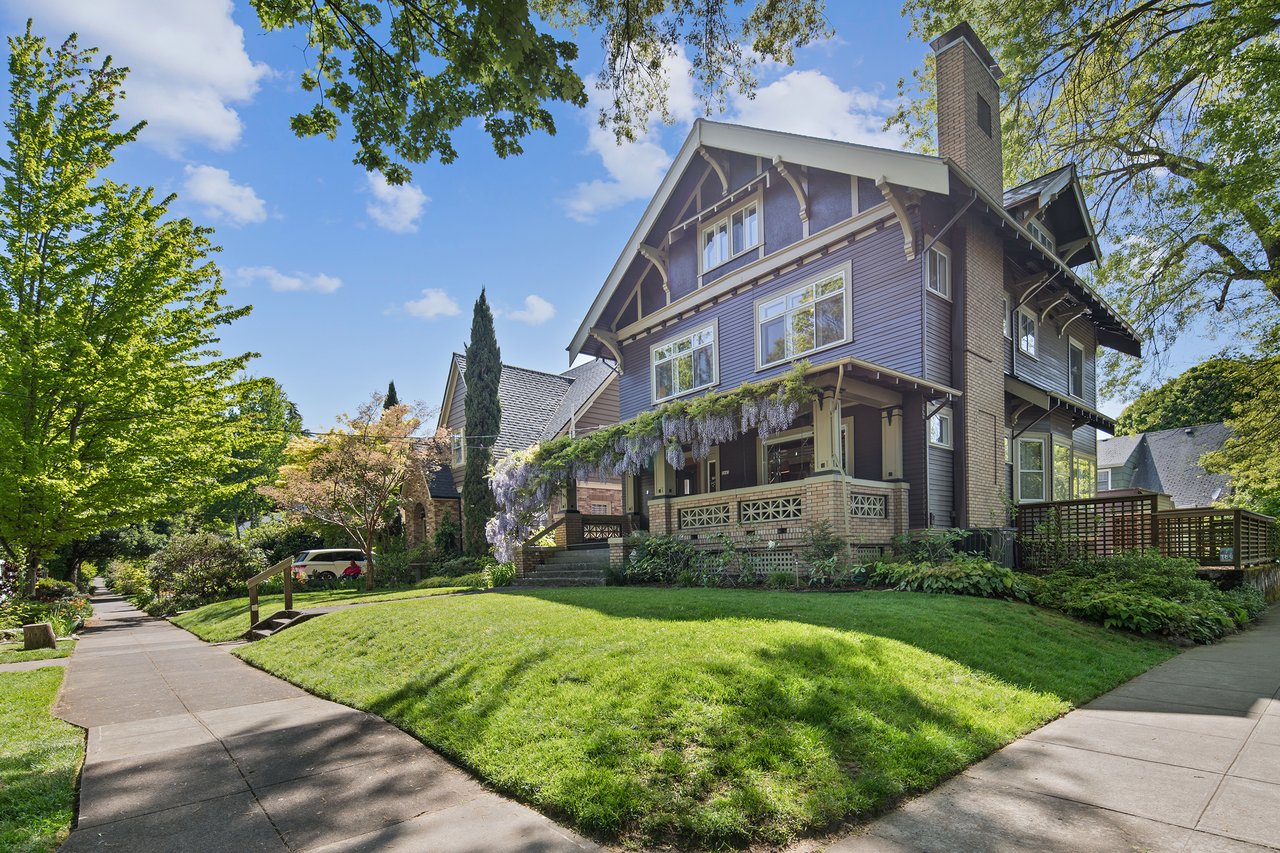
In 1910, he hired the architectural and building firm A.C. Emery & Company to design and construct his own home — a Craftsman foursquare at 2517 NE Hamlet Street. The house was not merely a residence. It was a statement.
By building early and building well, Mickelsen encouraged others to do the same.
Design as a Signal of Intent
The Craftsman foursquare style reflected the values driving Alameda’s early growth. These were not ostentatious homes. They emphasized livability, proportion, and durability — qualities that aligned with building restrictions Mikkelsen and his partners helped establish.
Homes were required to meet minimum construction costs. Single-family residences were mandated. Setbacks were carefully regulated based on the contours of the land. These restrictions made Alameda a model for later residential planning standards adopted by the City of Portland.
The result was consistency without uniformity — a neighborhood designed to age gracefully.
Infrastructure Follows Belief
Mikkelsen’s efforts extended beyond housing. He was reportedly instrumental in securing a streetcar spur branching from the Irvington line at East 22nd and Fremont. Completed by 1911, the line ran up Regents Drive and made the ridge meaningfully accessible.
Sanitary sewer service followed by 1917, replacing cesspools and completing the infrastructure needed for sustained residential growth.
In Alameda, belief preceded convenience. Development came first. Infrastructure followed.
A Brief Presence, A Lasting Impact
Otto Mikkelsen was born in New York around 1883 and arrived in Portland in 1907 after attending business college, drawn by the city’s rapid expansion. His time in Alameda was concentrated but decisive.
When building activity slowed during the years surrounding World War I, Mikkelsen diversified into insurance while remaining connected to the Alameda Land Company. In 1918, he reportedly moved to California, drawn by postwar growth opportunities there.
He did not stay long in Portland. But he stayed long enough.
The Legacy Still Visible Today
Alameda’s character is not defined by a single house or a developer’s name etched into stone. It’s defined by restraint, consistency, and early decisions that prioritized livability over speculation.
Otto Mikkelsen may not have been the wealthiest or most powerful figure involved in Alameda’s development, but he possessed something equally important: vision, backed by action.
More than a century later, that vision is still legible — in the streets, the setbacks, the homes, and the way the neighborhood holds together.
At Portland Modern, this is the kind of history we pay attention to — not simply what was built, but why it worked, and why it continues to endure.