Raleigh Hills & West Slope: A Mid-Century Experiment
Travel west of Portland across the hills toward Beaverton, and the landscape changes almost immediately. Streets bend with the terrain. Houses stretch horizontally across their lots. Rooflines sit low against the skyline.
The architecture feels different.
That difference reflects a moment in time when Portland’s western suburbs began transforming from rural land into neighborhoods shaped by the ideas of mid-20th-century modern living.
From Rural Hills to Suburban Experiment
Before World War II, much of the area surrounding Raleigh Hills and West Slope remained semi-rural. Early roads were little more than wagon routes and pioneer trails, and Portland itself was connected by an electric streetcar network that extended west only as far as Forest Grove.
The Depression slowed development across the region, and large portions of the hills remained open land.
After World War II, however, a dramatically different economy and way of life began to reshape the landscape. Returning soldiers, expanding families, and rising automobile ownership pushed development beyond Portland’s traditional grid.
The rolling terrain of the west hills encouraged a different pattern of building. Instead of the rectilinear street grid common on Portland’s east side, neighborhoods followed the contours of the land. Homes were placed to capture views, sunlight, and privacy.
This environment proved ideal for a new architectural language emerging across the United States.
The Rise of Mid-Century Living
By the 1950s and 1960s, architects and builders in the Raleigh Hills and West Slope area were experimenting with what was broadly described as “modern” residential design.
The term often encompassed several overlapping styles.
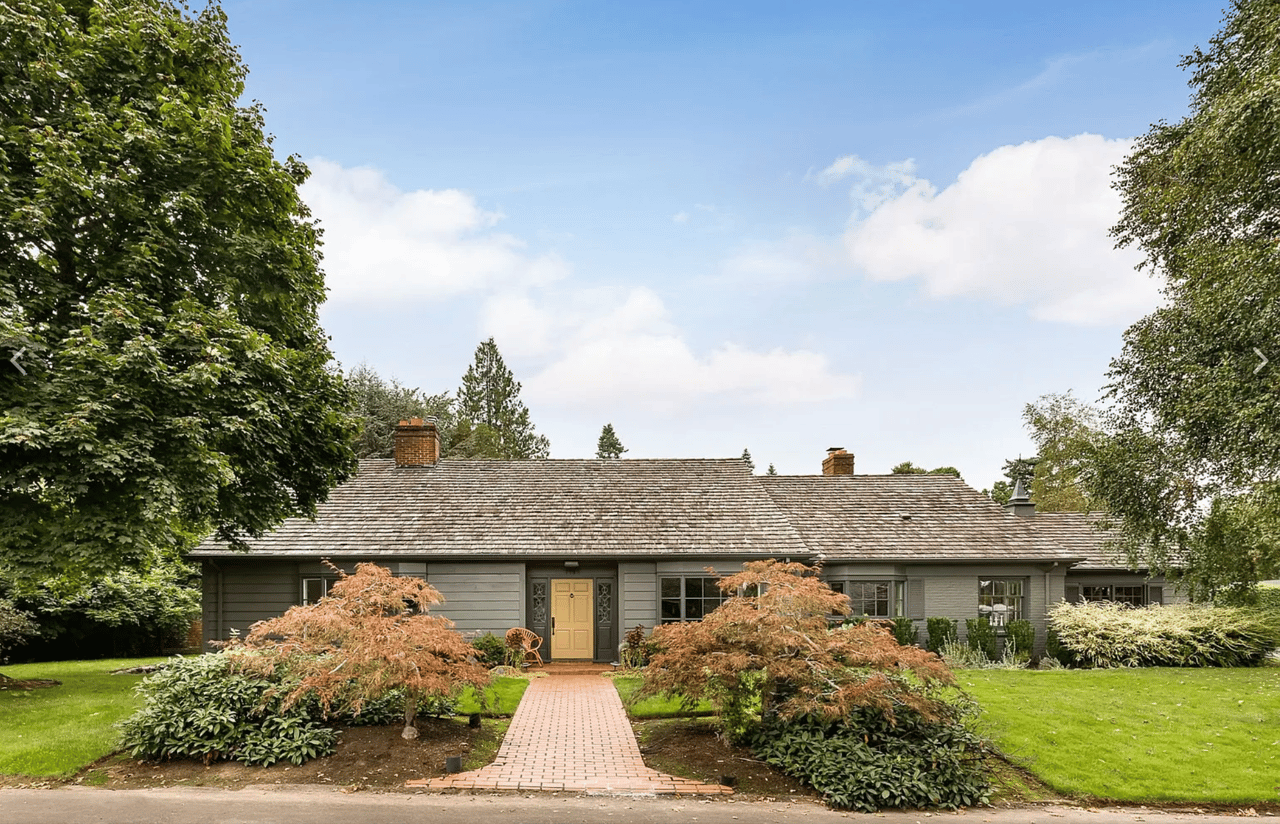
Ranch homes became the dominant form in many suburban developments. These houses emphasized long horizontal lines, low-pitched roofs, and an easy connection between indoor and outdoor spaces.
Variations appeared throughout the hills:
- L-shaped Ranch homes, designed to create sheltered courtyards and private outdoor living areas
- U-shaped Ranch homes, which framed a central outdoor space and emphasized family living around the courtyard
- Split-entry homes, which became popular in the 1960s as builders adapted designs to sloping terrain
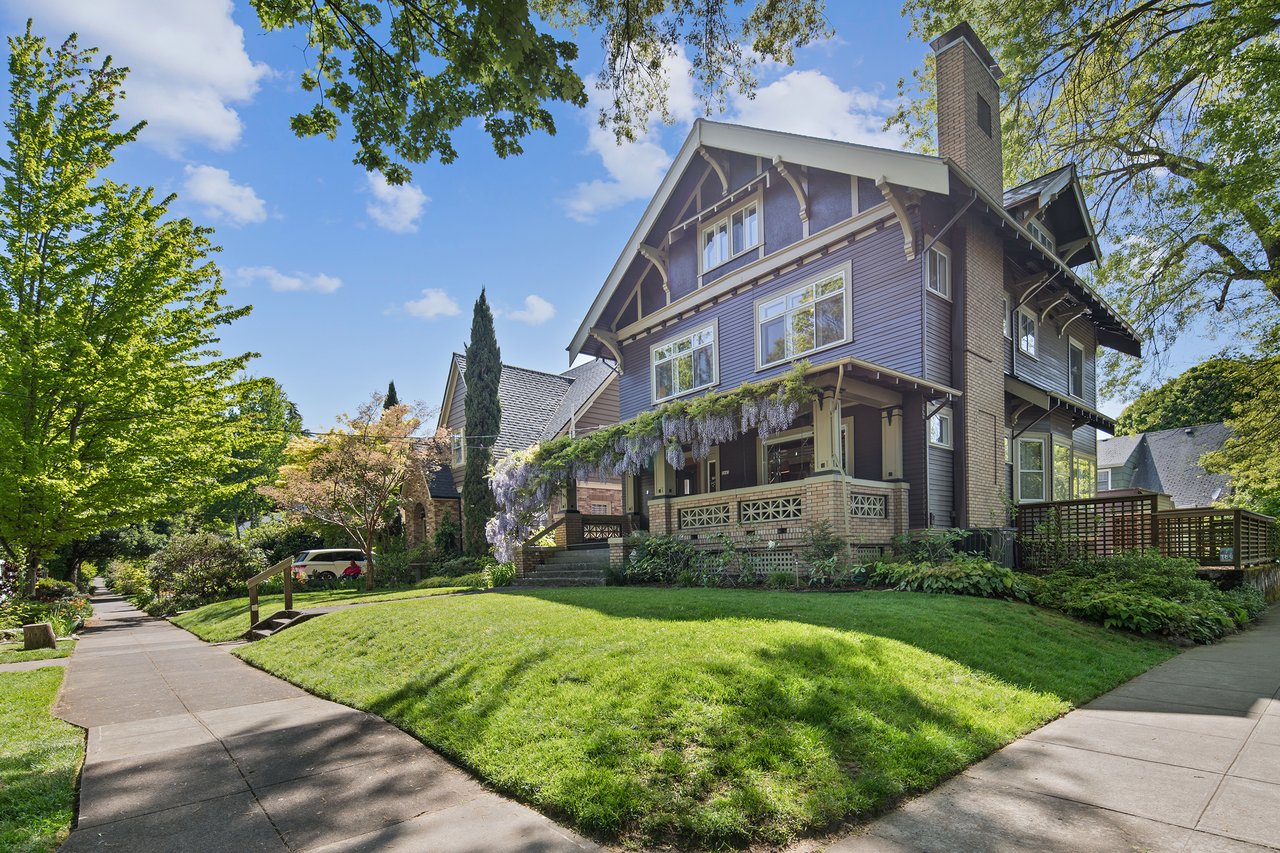
Alongside these variations, Colonial Revival houses also appeared, offering a more traditional counterpoint to modern suburban design.
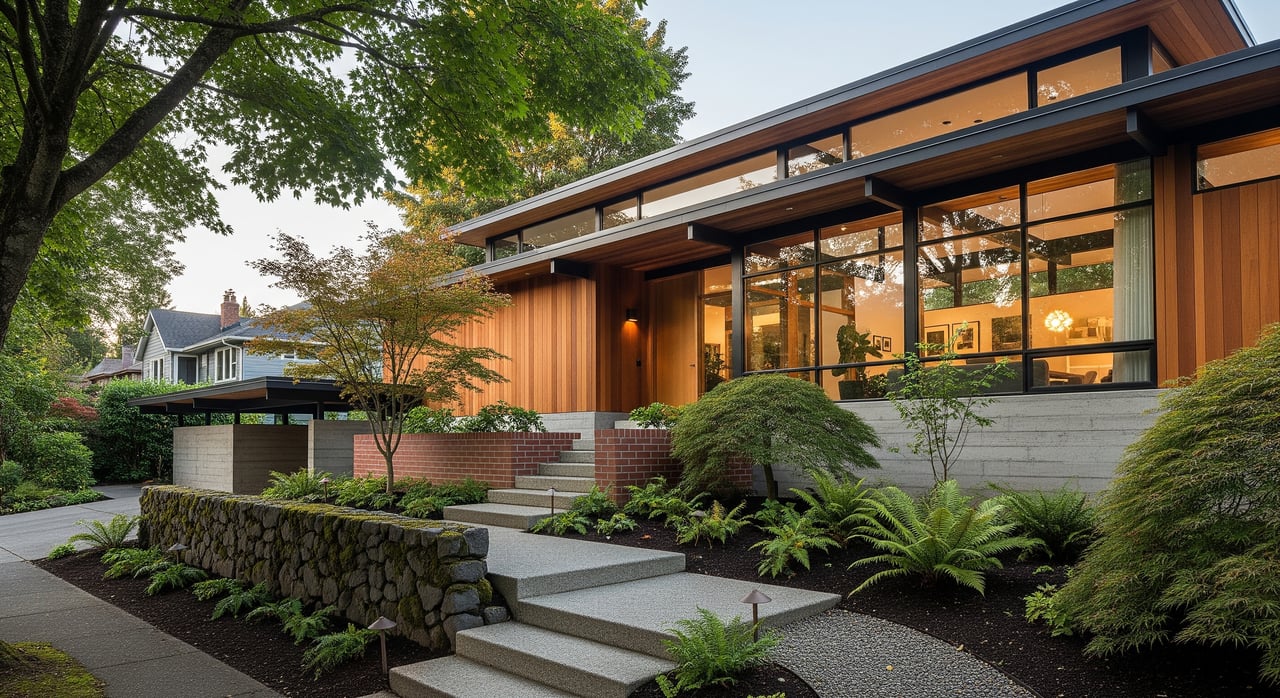
But it was Mid-Century Modern architecture that most clearly captured the spirit of the era.
These homes emphasized openness, light, and simplicity. Floor plans flowed between rooms. Large windows connected interior living spaces to the surrounding landscape. Vaulted ceilings, exposed beams, and indoor-outdoor patios became defining elements.
Many designs drew inspiration from California modernists such as Joseph Eichler, whose homes featured atriums, open floor plans, and expansive glass walls. In the Portland area, builders and architects adapted those ideas to the Pacific Northwest climate and terrain.
The result was a regional interpretation of modern living.
Architects and Builders of the Hills
Several architects and builders helped shape the character of West Slope and Raleigh Hills during this period.
Wesley C. Bauman, a prominent builder active through the 1960s, constructed many homes in the former Golf Club/Broadmoor area of West Slope. His houses often incorporated expanded floor plans and upgraded amenities within the Ranch style framework.
Architect Robert Rummer, whose work was strongly influenced by Eichler’s California developments, introduced atrium-centered Mid-Century Modern homes to the Portland region. His designs featured open floor plans, vaulted ceilings, exposed beams, and central living spaces filled with natural light.
Local architect Ralph Panhorst, educated at the University of Oregon, also contributed to the architectural landscape of the west hills, designing residences as well as apartments and commercial buildings during a long career in Portland.
Even skilled craftsmen played a role. Builder Max Shimshak, a Russian-born carpenter who arrived in the United States in 1910, is credited with designing many mid-century ranch homes throughout the Raleigh Hills area.
Together, these architects and builders created a neighborhood environment defined by experimentation, adaptability, and a willingness to rethink how homes could interact with landscape and family life.
A Different Kind of Portland Neighborhood
Unlike Portland’s eastside neighborhoods—many of which were shaped during the streetcar era—the west hills developed in the age of the automobile.
Roads followed topography rather than rigid grids. Homes were designed with garages integrated into the structure. Outdoor patios and courtyards replaced traditional front porches as gathering spaces.
By the 1950s and 1960s, Raleigh Hills and West Slope had transformed from rural land into a fully suburban environment, shaped by modern architectural ideas and a rapidly changing American lifestyle.
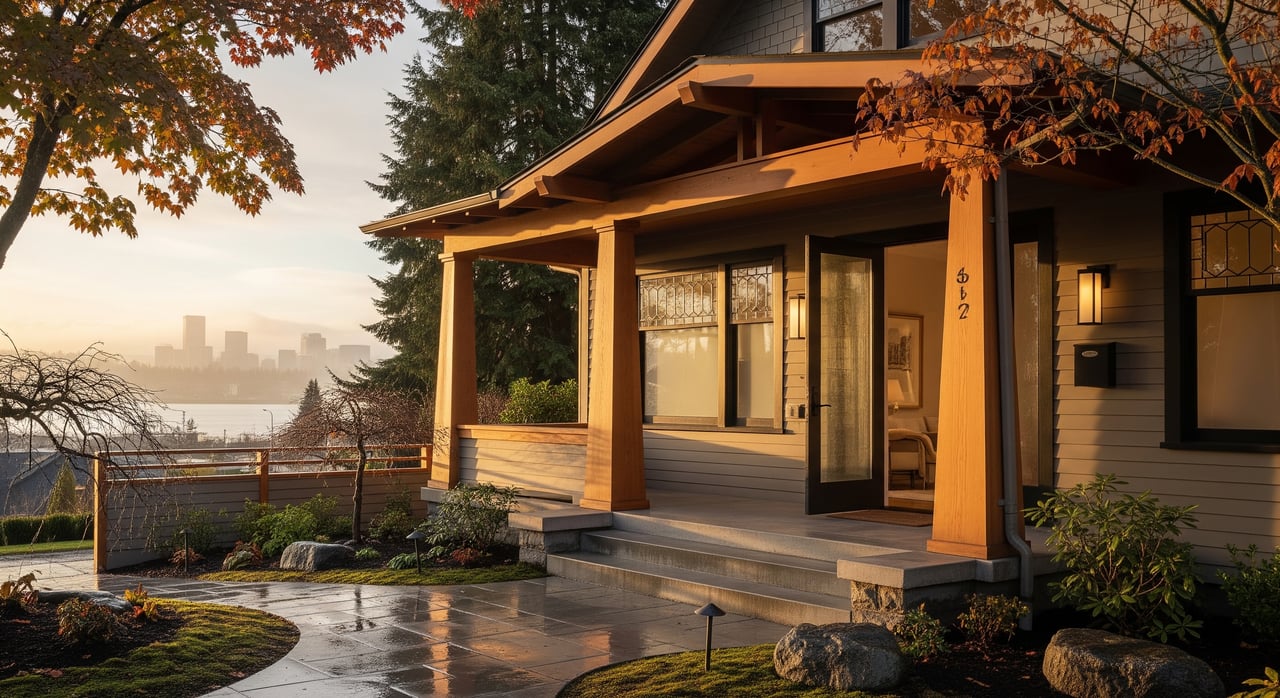
Today, the architectural diversity of these neighborhoods remains visible in the mix of Ranch homes, Mid-Century Modern houses, and traditional styles that continue to line the winding streets.
Why It Still Matters
At Portland Modern, we often look closely at neighborhoods shaped during periods of architectural transition.
The homes built in West Slope and Raleigh Hills represent a moment when Portland’s residential design shifted from traditional urban patterns toward a more modern, landscape-oriented way of living.
These houses were not simply suburban development.
They were experiments in how architecture could respond to terrain, climate, family life, and a changing culture.
And many of those ideas still feel remarkably contemporary today.